Your AI Agent Doesn't Need Better Prompts. It Needs a Map of Your Business.
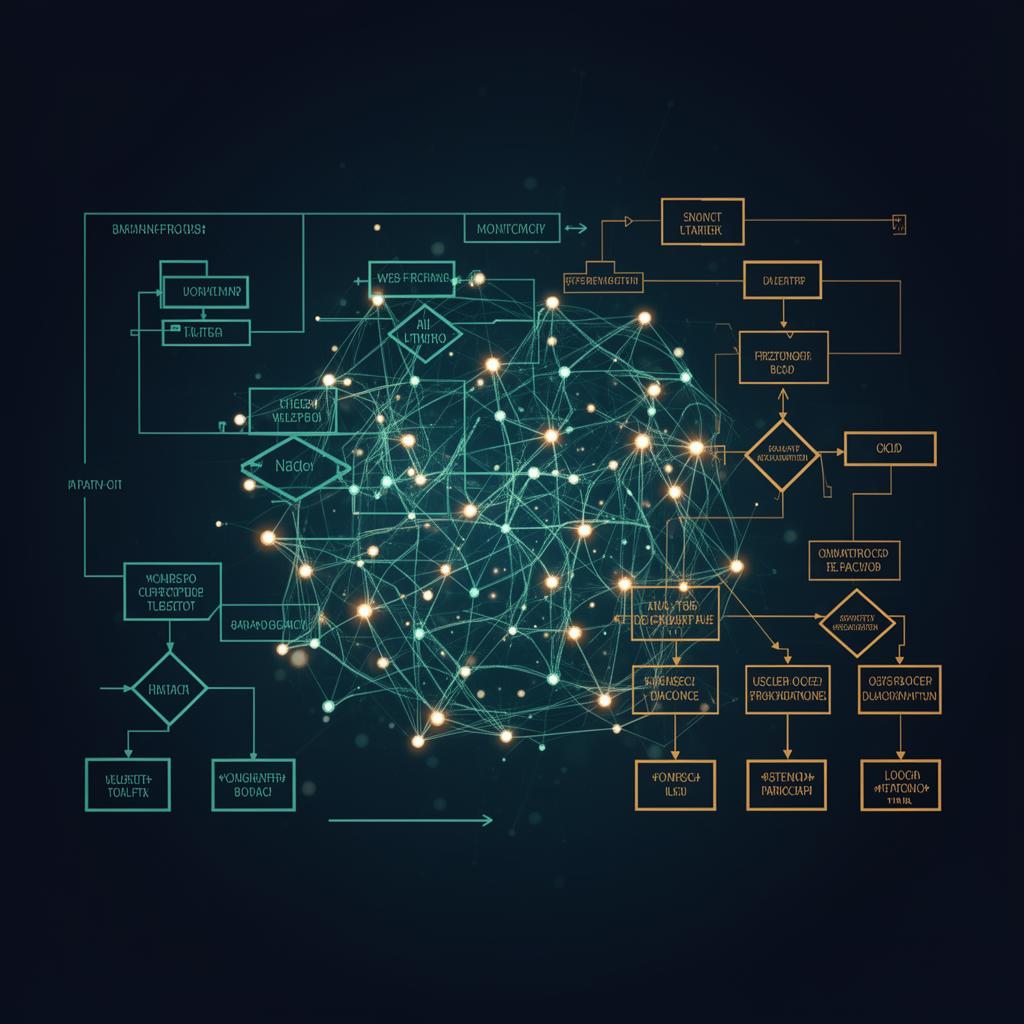
Everyone's buying AI agents right now.
Customer support bots. Sales automation. Content generators. Internal knowledge assistants. The pitch is always the same: plug it in, watch it work, save money.
And it sounds right—until you actually try it.
Then you discover something uncomfortable: the AI doesn't know your business. Not really. It doesn't know which decisions require your approval and which ones don't. It doesn't know that "urgent" from Client A means Tuesday and "urgent" from Client B means right now. It doesn't know that your top salesperson handles exceptions differently than your newest hire—and that both are technically correct.
The tool isn't the problem. The absence of operational clarity is.
This is the gap nobody's talking about—and it's the reason most AI implementations stall, disappoint, or quietly get abandoned.
The Knowledge Problem Hiding Inside Every AI Rollout
I see it repeatedly with the founders and operators I work with: they invest in a sophisticated AI tool, point it at their business, and expect it to perform. When it doesn't, they blame the platform. Or the vendor. Or the model.
But the real failure happened long before the AI was involved.
It happened because the company's own knowledge—how things actually work, who decides what, where exceptions live, which processes are real versus aspirational—was never documented. It lived in people's heads. In tribal knowledge. In "well, Sarah just knows how to handle that."
AI agents are merciless mirrors. They expose every gap in your operational logic, every undocumented exception, every decision tree that exists only as muscle memory in your best employee's brain.
An AI agent trained on incomplete company knowledge doesn't make smart decisions. It makes confident wrong ones—at scale.
This is not a technology failure. It's an architecture failure. And the architecture I'm talking about isn't software. It's operational.
What "Company Knowledge" Actually Means
When AI companies say your agent needs "access to company knowledge," they make it sound simple. Upload your docs, connect your Notion, sync your CRM. Done.
Except company knowledge isn't a file library. It's a living system of decisions, hierarchies, exceptions, and context that determines how your business actually runs. Let me break it down:
- Decision Architecture — Who approves what, at what threshold, and when does that change? Most companies can't answer this clearly. The AI certainly can't guess it.
- Process Reality vs. Process Aspiration — There's the process you designed in a planning meeting. And there's the process your team actually follows on a Tuesday afternoon when three things go wrong simultaneously. AI needs the real version—not the pretty one from your ops manual.
- Exception Handling Logic — Eighty percent of your operations run on the standard playbook. The other twenty percent—the exceptions, edge cases, and judgment calls—is where value lives and where AI breaks. If your exception-handling lives in people's heads instead of documented processes, the AI will surface those gaps immediately.
- Role Boundaries and Escalation Paths — When a customer complaint crosses from "support handles it" to "the founder needs to step in," what triggers that shift? If you can't articulate it, neither can an AI agent operating on your behalf.
- Contextual Priorities — Your business doesn't treat every client, project, or revenue stream the same—even if your official process says it does. AI needs to understand the actual hierarchy, not the egalitarian version on your website.
None of this is a prompt engineering problem. It's an operational mapping problem. And until you solve it, no AI tool will perform the way you imagined.
Why Operational Mapping Has to Come First
There's a specific sequence that works, and most companies get it backwards.
The typical approach: buy the tool → feed it data → expect performance → troubleshoot when it fails.
The approach that actually works: map your operations → document your decisions → identify what can be automated and what can't → then implement the tool.
The difference isn't subtle. It's the difference between giving a new hire the company's entire Google Drive on day one and giving them a clear five-page briefing on their specific role, authority, and escalation paths. One is noise. The other is knowledge.
Technology delivers about 20% of an initiative's value. The other 80% comes from redesigning the work.
This is exactly what the best-performing companies in the AI space are discovering right now. The ones scaling successfully aren't the ones with the fanciest models. They're the ones that did the operational homework first.
They mapped their workflows before they automated them. They documented their decision trees before handing them to an agent. They figured out which 20% of their work requires human judgment and built guardrails around it—before letting the AI run.
The Five Questions to Answer Before You Implement Any AI Agent
Before you spend another dollar on AI tooling, sit down with your leadership team and answer these. Honestly. On paper.
1. What decisions in this business require human judgment—and what's the actual threshold? Not the theoretical threshold. The real one. The one your team uses on a Friday afternoon. Map every decision point in the workflow you're planning to automate and tag each one: fully automatable, automatable with human approval, or human-only.
2. Where does our institutional knowledge currently live? If the answer is "in Sarah's head" or "we all just kind of know," you have a documentation problem that no AI can solve. Extract it first. Codify it. Make it transferable—to a person or a machine.
3. What are our actual processes—not our intended ones? Shadow your team for a week. Watch what really happens. Document the workarounds, the shortcuts, the unofficial escalation paths. This is the real operating system of your business, and this is what your AI agent needs to learn.
4. What does 'good' look like—and how will we measure it? If you can't define success metrics before you deploy, you won't be able to evaluate performance after. Define what operational efficiency, customer experience, and error rates should look like before the AI gets involved.
5. What's our kill switch? When the AI makes a mistake—and it will—who catches it? How fast? What's the rollback plan? If you don't have answers, you're not ready.
The Real Competitive Advantage Isn't the Tool. It's the Map.
Most people miss it, but the technology in the current AI race is commoditizing. The models are getting cheaper, faster, and more accessible by the month. Within a year or two, the difference between platforms will be marginal.
The lasting competitive advantage won't be which AI you use. It'll be how well you know your own business.
The companies that mapped their operations—documented their decisions, clarified their hierarchies, codified their exceptions—will deploy AI agents that actually perform. They'll move faster, make fewer mistakes, and scale without the chaos that everyone else is drowning in.
The companies that skipped this step will keep cycling through tools, blaming vendors, and wondering why their competitors seem to be pulling ahead.
Autonomy doesn't fix chaos. It amplifies it. AI agents deployed on top of unclear operations don't create efficiency—they create confident, high-speed dysfunction.
What This Looks Like in Practice
I'll give you a real scenario. A founder I worked with was ready to implement an AI-powered customer onboarding system. They had the tool, the budget, and the enthusiasm.
When we sat down and mapped the actual onboarding process, we found seven undocumented decision points, three places where the process branched based on client size (but nobody had written the rules), and an entire exception path that only one team member knew about.
If they'd deployed the AI without this mapping, it would have automated the "official" onboarding process—which only about 40% of their clients actually experienced. The other 60% would have hit a wall, flooded the support team, and eroded trust.
Instead, we documented everything first. Built the decision map. Clarified the exception logic. And when they did implement the AI agent, it worked—because it was working with accurate, complete operational knowledge.
Not because the tool was better. Because the foundation was.
The Bottom Line
AI agents are powerful. They're getting more powerful every quarter. And they will absolutely transform how businesses operate.
But they won't transform your business if your business can't describe itself. If your processes live in people's heads, your decisions lack clear ownership, and your exceptions are handled by instinct rather than design—the AI will fail. Politely, confidently, and expensively.
The work that matters most right now isn't choosing the right AI tool. It's building the operational map that makes any tool effective.
Start there. Everything else follows.