The Founder’s Blind Spot: Why Being “Inside the Business” Kills Growth
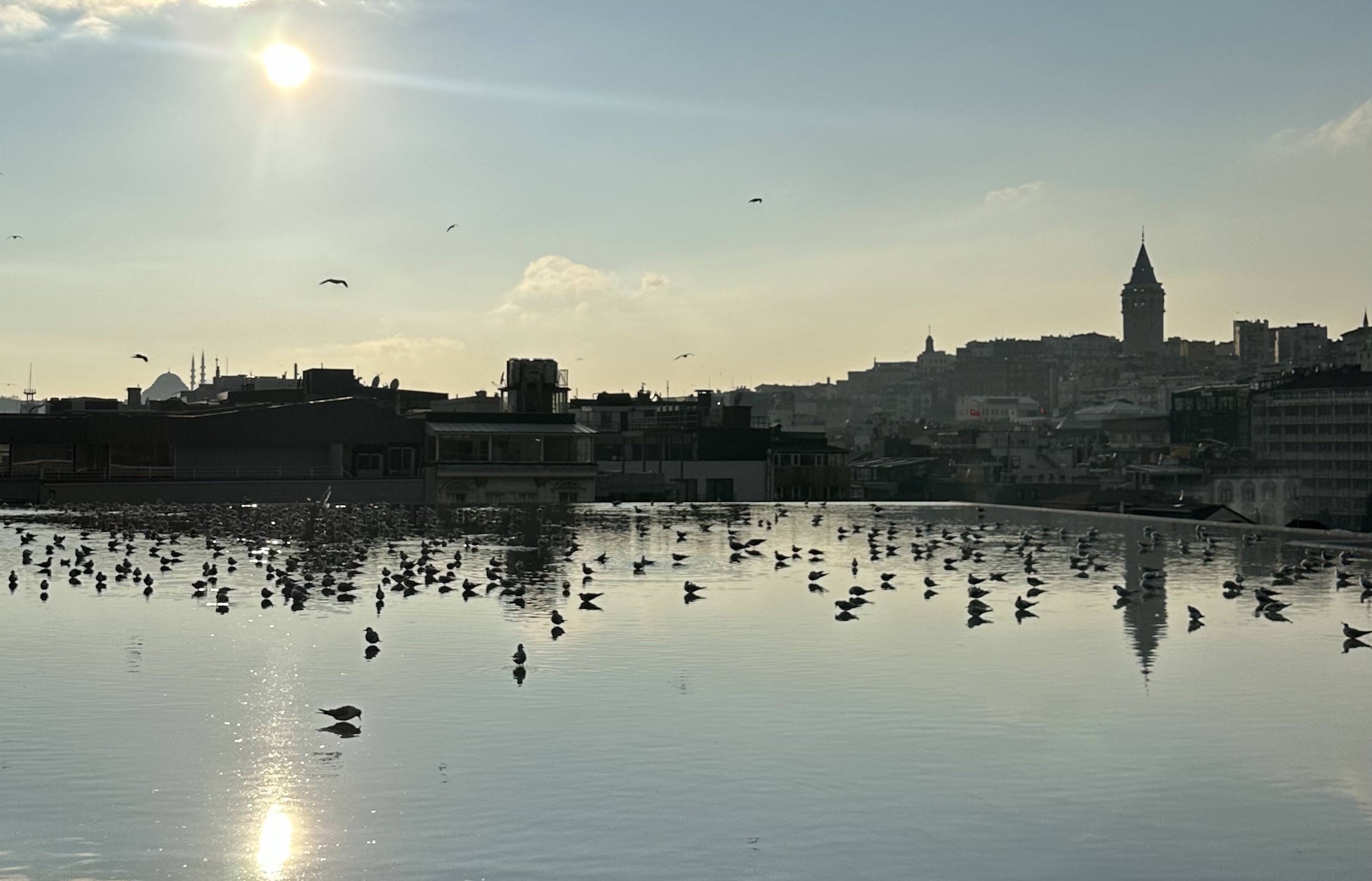
I’m writing this from Istanbul, and I love this city in a way that is hard to explain rationally. It’s not just beautiful. It’s not just historical. It’s not even just cultural. It’s layered. It’s Europe and Asia touching each other without fully merging. It’s Western structure and Eastern depth existing in the same breath. It’s ancient mosques next to contemporary rooftops. It’s intensity, movement, negotiation, noise, elegance, contradiction. You walk through it and you feel something happening inside you. The city is not neutral. It has a pulse.
When you’re here, you don’t observe Istanbul from a distance. You are inside it. You move through narrow streets that suddenly open into water views. You sit in cafés where five languages float around you. You watch traffic that looks chaotic but somehow functions. You don’t analyze it. You absorb it. And the experience feels alive. It feels like you are participating in something bigger than yourself.
That immersion is powerful. And the longer I sit with it, the more I realize how similar it feels to being a founder inside your own business.
I spend a lot of time with founders, and I genuinely love those conversations. There is something magnetic about people who build. People who decide that something should exist and then bring it into reality through force of will, creativity, and resilience. Founders carry vision differently. They think in motion. They see opportunities before they are structured. They tolerate uncertainty. They move fast. Being around that energy is inspiring.
But in almost every case, I notice the same pattern: they are fully immersed in their business, yet they rarely have a structured way to see it objectively. Not emotionally. Not intuitively. Objectively.
I am often surprised by how many founders — even those running companies doing tens of millions per year — do not have a clean, transparent P&L that clearly shows revenue, COGS, gross profit, operating expenses, marketing spend, and net profit in a way that informs strategic decisions. Sometimes there is accounting, of course. Taxes are filed. Revenue is tracked. But there is no architectural view of the business. No system that allows them to step back and see where value is truly created and where it quietly leaks.
They know their business in their body. They feel when sales are strong. They sense when cash is tight. They can tell you which team member is “good” and which channel is “working.” But feeling something is not the same as designing it. Intuition can build a company. It cannot scale it cleanly.
Being inside Istanbul feels incredible. But when you are inside it, you cannot see the city as a system. You don’t see how the districts connect economically. You don’t see how traffic patterns influence business density. You don’t see the architecture from above. You see fragments. You experience streets. You feel energy. You respond in real time. And because it feels intense and alive, you assume you understand it.
Founders live in that same intensity. Inside the business, everything feels urgent. Clients, hiring, marketing campaigns, product tweaks, operational fires, cash flow management. There is constant movement. And movement feels like progress. When you are busy, you feel productive. When you are solving problems all day, you feel essential.
But activity is not the same as structure. Motion is not the same as scale.
When you are fully immersed in daily operations, it becomes extremely difficult to ask slower, heavier questions. Where exactly is profit generated? Which product or service truly drives margin after delivery costs? Are we buying revenue through marketing, or are we generating sustainable profit? Is this team structure designed for growth, or is it compensating for the founder’s habits? These are not emotional questions. They are architectural questions. And architecture requires distance.
Tomorrow I’m flying back to Los Angeles. Fourteen hours in the air. I already know that somewhere over the ocean, as the city becomes memory instead of environment, my perspective will change. I will think about where I stayed and whether it was the right choice. I will think about how I structured my days. I will remember the streets I loved and the ones that drained me. I will start seeing patterns instead of moments. I will separate what felt intense from what was actually optimal.
Distance creates clarity. Altitude creates perspective.
Founders rarely give themselves altitude.
And without altitude, they build inside emotion.
There is a reason so many businesses plateau at a certain level. It is not always competition. It is not always market conditions. Very often, it is because the founder never stepped outside the business long enough to redesign it structurally. They continue adding — new services, new hires, new marketing initiatives — without refining what already works. They scale complexity instead of scaling clarity.
You cannot scale what you have not systematized. You cannot optimize what you have not clearly measured. And you cannot delegate what exists only inside your head.
A real financial structure is not about bureaucracy. It is about visibility. A transparent P&L forces honesty. COGS reveals whether your delivery model is actually efficient. Gross profit shows whether your pricing aligns with reality. Operating expenses expose where growth is strategic and where it is impulsive. Marketing efficiency tells you whether you are building an asset or funding momentum. Net profit removes illusion.
Numbers do not remove creativity. They protect it.
When founders resist this structure, it is rarely because they are incapable. It is usually because they are immersed. They are inside the city. They are reacting to traffic instead of redesigning the map. And when you are inside the noise, it is hard to admit that you cannot see the whole system.
This is why external perspective matters. Not as control. Not as criticism. But as altitude.
At some point, every founder reaches a ceiling that is invisible from the inside. They believe growth requires more effort. More marketing spend. More expansion. More people. Sometimes growth requires subtraction. Sometimes it requires focusing on the one segment that actually generates disproportionate margin. Sometimes it requires simplifying an offer instead of multiplying it. Sometimes it requires restructuring cost before chasing revenue.
These decisions are almost impossible to make when you are emotionally attached to every part of your creation.
You don’t need someone to diminish your vision. You need someone who can see your city from above. Someone who can map your business objectively. Someone who can look at your financial architecture and ask precise questions without ego. Someone who can help translate your instinct into a system that can survive beyond your daily presence.
Istanbul is magical because it is immersive. But if I were responsible for designing its infrastructure, I would not do it from street level. I would need maps. I would need data. I would need distance.
Your business deserves the same.
Stay passionate. Stay immersed. Build boldly. Walk the streets. Feel the pulse.
But schedule your altitude.
Because growth does not come from motion alone. It comes from perspective.